Local SEO Strategies for Small Businesses







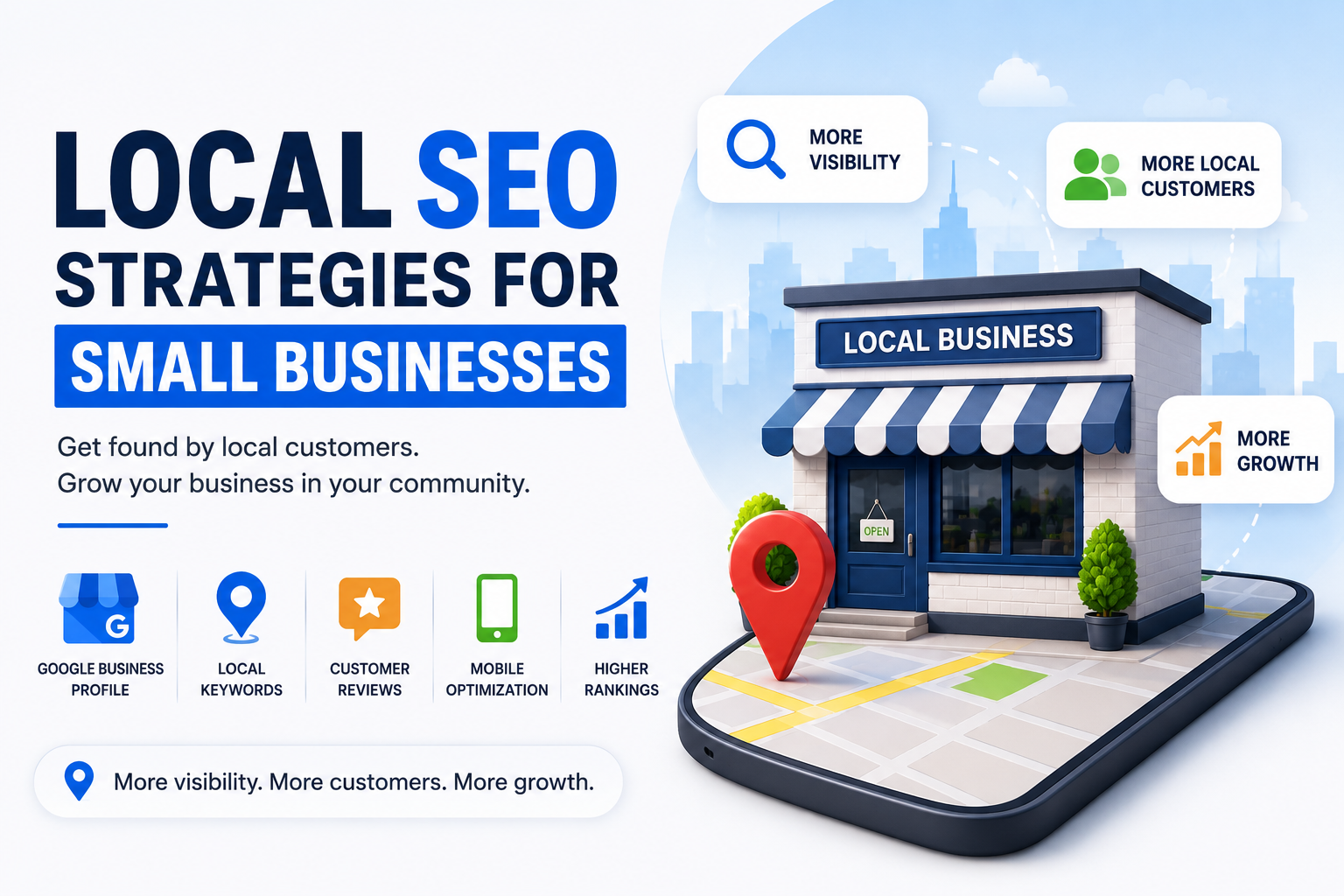


Local SEO Strategies for Small Businesses
In today’s digital world, small businesses need more than just a physical presence to attract customers—they need strong online visibility too. When people search for products or services “near me,” businesses that appear at the top of search results often get the most clicks, calls, and visits. This is where Local SEO (Search Engine Optimization) becomes essential.
Local SEO helps small businesses improve their visibility in location-based search results, making it easier for nearby customers to find them. Here are some effective local SEO strategies that can help your small business grow.
1. Optimize Your Google Business Profile
One of the most important steps in local SEO is setting up and optimizing your Google Business Profile (formerly Google My Business).
Make sure your profile includes:
- Accurate business name
- Address
- Phone number
- Website link
- Business hours
- Services/products
- High-quality images
Keep your profile updated regularly so customers always see correct information.
Why it matters: A well-optimized profile improves your chances of appearing in Google Maps and local search results.
2. Use Location-Based Keywords
Target keywords that include your city, area, or service location.
Examples:
- Best bakery in Delhi
- Digital marketing agency in Mumbai
- Hair salon near Connaught Place
These keywords help search engines understand where your business operates.
Tip: Use location keywords naturally in titles, website content, headings, and meta descriptions.
3. Maintain NAP Consistency
NAP stands for Name, Address, and Phone Number.
Your business details should be exactly the same across:
- Website
- Google Business Profile
- Social media profiles
- Online directories
- Local listing websites
Even small differences can confuse search engines and hurt rankings.
Why it matters: Consistency builds trust and improves local search performance.
4. Collect Customer Reviews
Online reviews are a major ranking factor in local SEO.
Encourage happy customers to leave reviews on:
- Justdial
- Yelp
- Industry-specific platforms
Respond professionally to both positive and negative reviews.
Why it matters: Reviews improve trust, visibility, and click-through rates.
5. Create Location-Specific Website Pages
If your business serves multiple areas, create separate pages for each location.
For example:
- /digital-marketing-delhi
- /digital-marketing-gurgaon
- /digital-marketing-noida
Each page should contain unique content relevant to that location.
Why it matters: Helps rank for multiple local searches without keyword stuffing.
6. Optimize for Mobile Users
Most local searches happen on mobile devices.
Your website should be:
- Fast loading
- Mobile responsive
- Easy to navigate
- Click-to-call enabled
A poor mobile experience can drive customers away.
Why it matters: Better user experience improves rankings and conversions.
7. Add Local Business Schema Markup
Schema markup helps search engines better understand your business information.
It can highlight:
- Business name
- Location
- Contact details
- Opening hours
- Reviews
This can improve how your business appears in search results.
Why it matters: Better visibility and richer search listings.
8. Build Local Backlinks
Backlinks from local websites strengthen your authority.
Good local backlink sources include:
- Local blogs
- News websites
- Business directories
- Chamber of commerce websites
- Event sponsorships
Focus on quality rather than quantity.
Why it matters: Strong backlinks improve SEO rankings.
9. Publish Local Content
Create blog content related to your area and audience.
Examples:
- Best cafés in South Delhi
- Upcoming business events in Mumbai
- Shopping trends in Bangalore
Local content helps attract nearby searchers and improves relevance.
Why it matters: Increases organic traffic and community engagement.
10. Submit to Online Directories
List your business in trusted local directories like:
- Justdial
- IndiaMART
- Sulekha
- Yelp
- Yellow Pages
Ensure all information matches your main business details.
Why it matters: Increases discoverability and strengthens local signals.
11. Focus on Voice Search Optimization
Many people now use voice assistants for local searches.
Examples:
- “Best pizza near me”
- “Open pharmacy nearby”
Use conversational keywords and FAQ content to match voice search behavior.
Why it matters: Helps capture growing voice-based traffic.
Final Thoughts
Local SEO is one of the most cost-effective marketing strategies for small businesses. It helps attract nearby customers, improve online visibility, and increase foot traffic, calls, and leads.
By implementing these local SEO strategies consistently, small businesses can compete effectively—even against larger brands—and build a stronger presence in their local market.