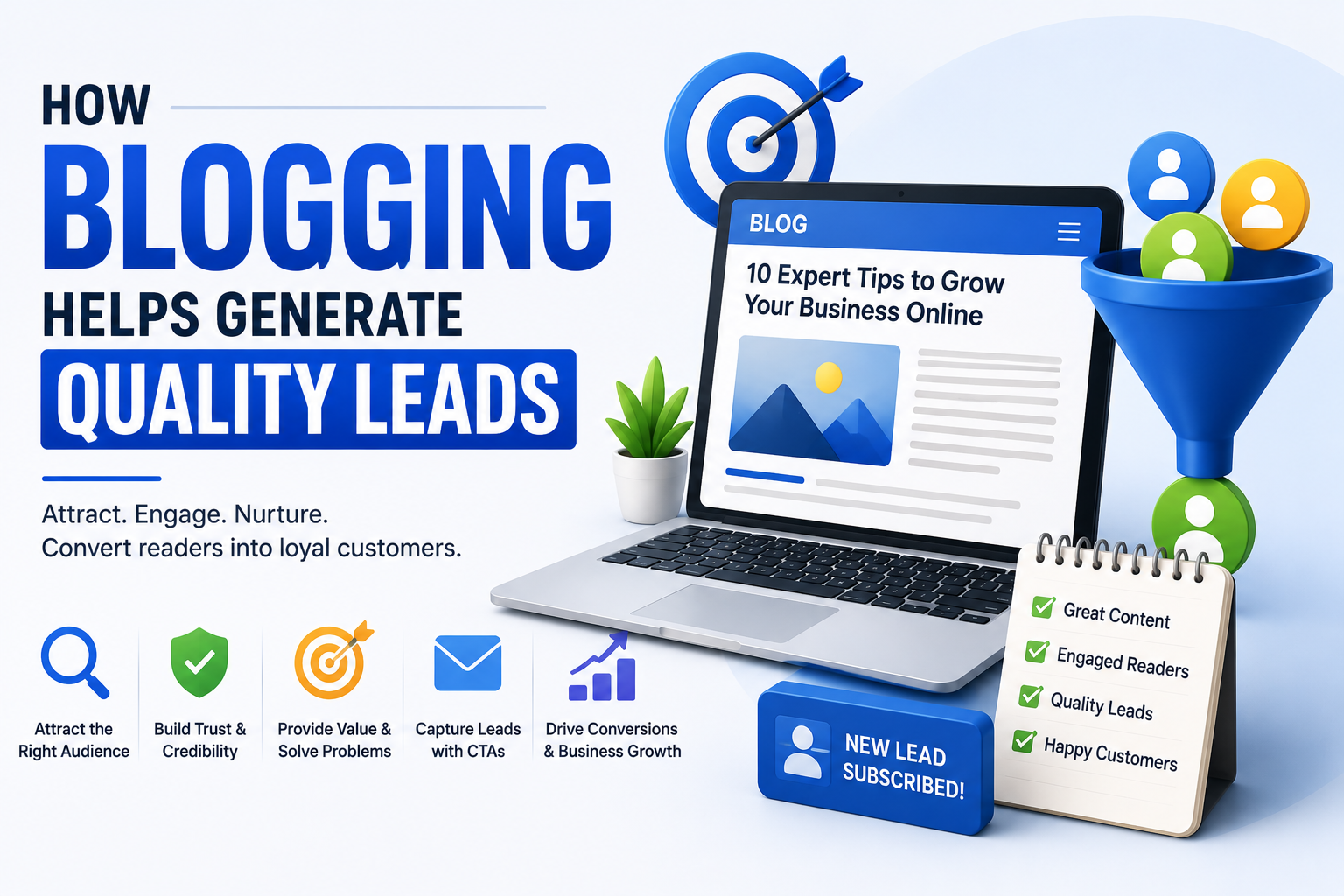
In today’s digital marketing landscape, businesses are constantly searching for effective ways to attract potential customers and convert them into loyal clients. While paid advertising can deliver quick results, one long-term strategy that consistently generates valuable leads is blogging. A well-planned blog does more than share information—it helps build trust, improve visibility, and attract people who are genuinely interested in your products or services.
Here’s how blogging helps generate quality leads for your business.
1. Attracts the Right Audience Through Search Engines
One of the biggest advantages of blogging is its ability to bring organic traffic to your website through search engines. When you create blog content around topics your target audience is actively searching for, your website becomes more discoverable.
For example, if you run a digital marketing agency and publish blogs like “Best Social Media Strategies for Small Businesses” or “How SEO Improves Website Traffic,” potential customers searching for these topics may land on your website.
Because these visitors are already interested in your niche, they are more likely to become quality leads.
2. Builds Trust and Credibility
Customers prefer to buy from businesses they trust. Blogging allows you to demonstrate expertise by sharing helpful insights, practical advice, and solutions to common problems.
When readers find valuable information on your website, they begin to see your brand as knowledgeable and reliable.
For example, if someone reads multiple informative blogs from your company about digital marketing, they are more likely to trust your services compared to a competitor with no useful content.
Trust is often the first step toward conversion.
3. Supports SEO and Improves Online Visibility
Every blog post creates a new opportunity for your website to rank in search engines.
Benefits include:
- More indexed pages
- More keyword targeting opportunities
- Better internal linking
- Improved website authority
Higher rankings bring more relevant visitors, which increases lead generation potential.
The better your visibility, the more chances your ideal customers have to find you.
4. Converts Readers with Strong Calls-to-Action
A blog becomes a lead generation tool when it includes strategic calls-to-action (CTAs).
Examples:
- Download our free guide
- Book a consultation
- Contact our team
- Subscribe to our newsletter
- Request a free audit
Once a visitor finds your content helpful, they are more likely to take the next step.
Without a CTA, valuable traffic may leave without converting.
5. Helps Capture Leads Through Content Offers
Blogs can be used to promote lead magnets such as:
- E-books
- Checklists
- Free templates
- Webinars
- Case studies
For example, a blog about SEO tips can offer a downloadable SEO checklist in exchange for an email address.
This turns anonymous readers into potential leads you can nurture later.
6. Educates Potential Customers
Not every website visitor is ready to buy immediately.
Many potential customers are still researching solutions. Blogging helps educate them during the decision-making process.
Informative content answers questions, removes doubts, and explains why your solution matters.
This nurturing process improves lead quality because educated prospects make better purchasing decisions.
7. Encourages Social Sharing
Great blog content often gets shared across social media, email, and communities.
This expands your reach beyond your website audience and introduces your brand to new potential leads.
Helpful, engaging, and informative blogs naturally attract attention and referrals.
More exposure means more opportunities to generate leads.
8. Supports Email Marketing Growth
Blogging and email marketing work together effectively.
By encouraging readers to subscribe for updates, businesses can grow their email lists with interested prospects.
Once someone joins your email list, you can nurture them with:
- Helpful resources
- Product updates
- Offers
- Case studies
This helps convert blog readers into paying customers over time.
9. Targets Different Buyer Journey Stages
A smart blogging strategy addresses all stages of the customer journey:
Awareness: Educational content
Consideration: Comparisons and solution guides
Decision: Testimonials, case studies, service pages
This ensures you attract leads at different levels of readiness.
Final Thoughts
Blogging is far more than a content marketing activity—it’s a powerful lead generation engine.
By improving SEO, building trust, educating prospects, and encouraging conversions, blogging helps businesses attract high-quality leads consistently.
For companies looking for sustainable digital growth, blogging remains one of the most effective and affordable marketing strategies available.