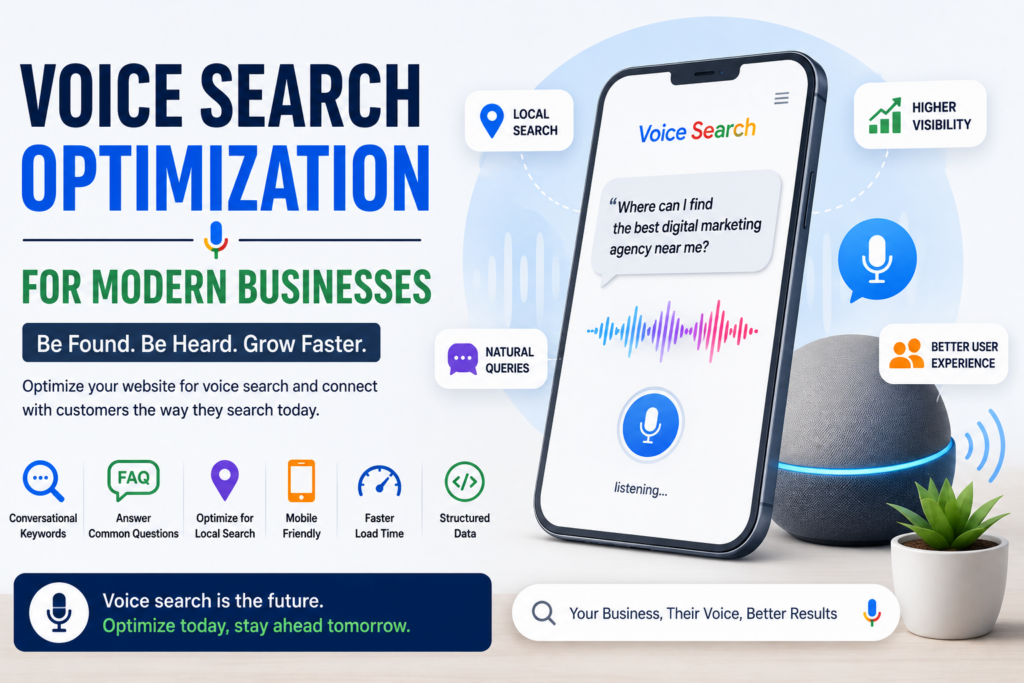
Voice Search Optimization for Modern Businesses







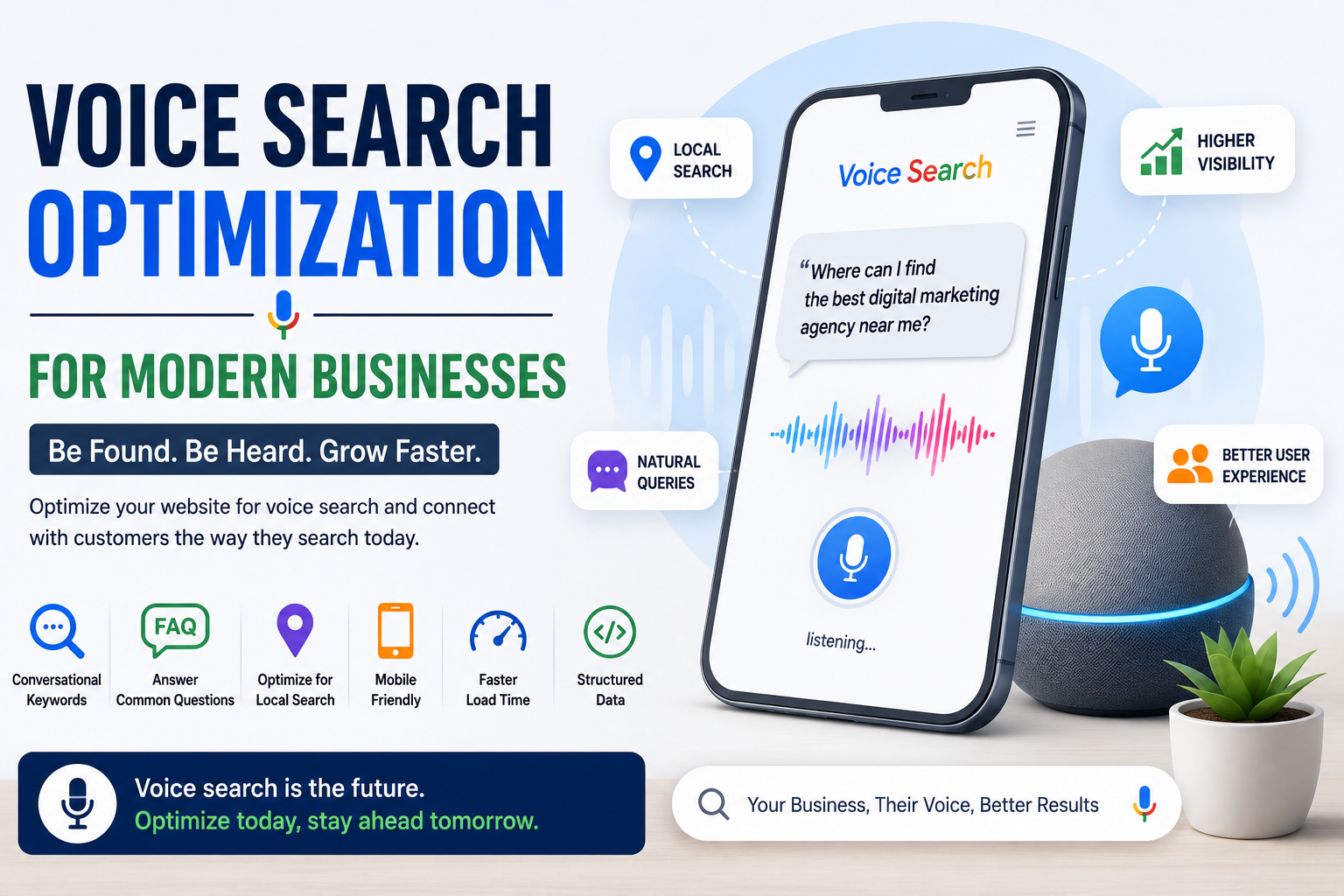


Voice Search Optimization for Modern Businesses
As technology continues to evolve, the way people search for information online is changing rapidly. Instead of typing short keywords into search engines, many users now prefer speaking their queries through voice assistants like Siri, Google Assistant, Alexa, and Cortana. This shift has made voice search optimization an important part of modern digital marketing.
For businesses, adapting to voice search is no longer optional—it’s becoming essential for staying competitive and reaching customers where they are. Here’s why voice search matters and how modern businesses can optimize for it effectively.
What is Voice Search Optimization?
Voice search optimization is the process of improving your website and content so it can appear in results for spoken search queries.
Unlike traditional text searches, voice searches are usually:
- More conversational
- Longer in length
- Question-based
- Focused on quick answers
- Often location-specific
For example:
Text search: “best coffee shop Delhi”
Voice search: “Which is the best coffee shop near me in Delhi?”
This difference changes how businesses approach SEO.
Why Voice Search Matters for Businesses
Voice search usage continues to grow because it offers speed, convenience, and hands-free access to information.
Customers use voice search for:
- Finding nearby businesses
- Asking product questions
- Booking appointments
- Checking store hours
- Searching for services
- Making quick purchase decisions
For local businesses especially, voice search creates major opportunities to attract ready-to-convert customers.
Businesses that ignore this trend risk losing visibility to competitors.
Strategies for Voice Search Optimization
1. Focus on Conversational Keywords
Traditional SEO often targets short phrases, but voice search relies on natural language.
Instead of optimizing for:
“digital marketing agency Delhi”
Optimize for:
“Which is the best digital marketing agency in Delhi?”
Use conversational phrases that reflect how real people speak.
Why it works: Voice assistants prioritize natural-language matching.
2. Optimize for Question-Based Searches
Most voice queries are framed as questions.
Common examples:
- What is the best SEO agency near me?
- How do I improve website traffic?
- Where can I find a bakery nearby?
Create content that directly answers common customer questions.
Adding FAQ sections can be highly effective.
Why it works: Question-based content aligns with voice search behavior.
3. Improve Local SEO
A large percentage of voice searches have local intent.
Examples:
- “Restaurants near me”
- “Open pharmacy nearby”
- “Best salon in Gurgaon”
To improve local visibility:
- Optimize Google Business Profile
- Keep contact details updated
- Use location keywords
- Collect customer reviews
- Maintain NAP consistency
Why it works: Voice assistants often prioritize local search results.
4. Optimize for Featured Snippets
Voice assistants often read answers from featured snippets (Position Zero in Google).
To increase your chances:
- Answer questions clearly
- Use short, direct responses
- Structure content with headings
- Use bullet points where helpful
Example:
A question like “What is voice SEO?” should have a simple answer near the top of the page.
Why it works: Clear answers are easier for voice assistants to deliver.
5. Make Your Website Mobile-Friendly
Most voice searches happen on mobile devices.
Your website should be:
- Fast loading
- Mobile responsive
- Easy to navigate
- Simple to interact with
A poor mobile experience can reduce rankings and increase bounce rates.
Why it works: Mobile performance directly affects voice SEO success.
6. Improve Website Speed
Voice users expect immediate answers.
Slow websites can hurt both user experience and search rankings.
Ways to improve speed:
- Compress images
- Reduce unnecessary scripts
- Use fast hosting
- Enable browser caching
Why it works: Faster websites provide better performance for voice search.
7. Use Structured Data (Schema Markup)
Schema helps search engines understand your content better.
Useful schema types include:
- Business information
- FAQs
- Reviews
- Products
- Events
This improves your chances of being selected for voice responses.
Why it works: Better context improves search engine interpretation.
8. Create Human-Friendly Content
Voice search favors content that sounds natural and easy to understand.
Avoid overly technical language when possible.
Write like you’re answering a real customer’s question.
Why it works: Human-friendly content matches spoken search patterns.
Final Thoughts
Voice search is changing the future of SEO and digital marketing. As more consumers rely on voice assistants for everyday searches, businesses must adapt their strategies to remain visible and competitive.
By focusing on conversational content, local SEO, mobile optimization, and quick answers, modern businesses can capture this growing search audience and create better customer experiences.
Voice search optimization isn’t just a future trend—it’s a present-day opportunity for smarter digital growth.