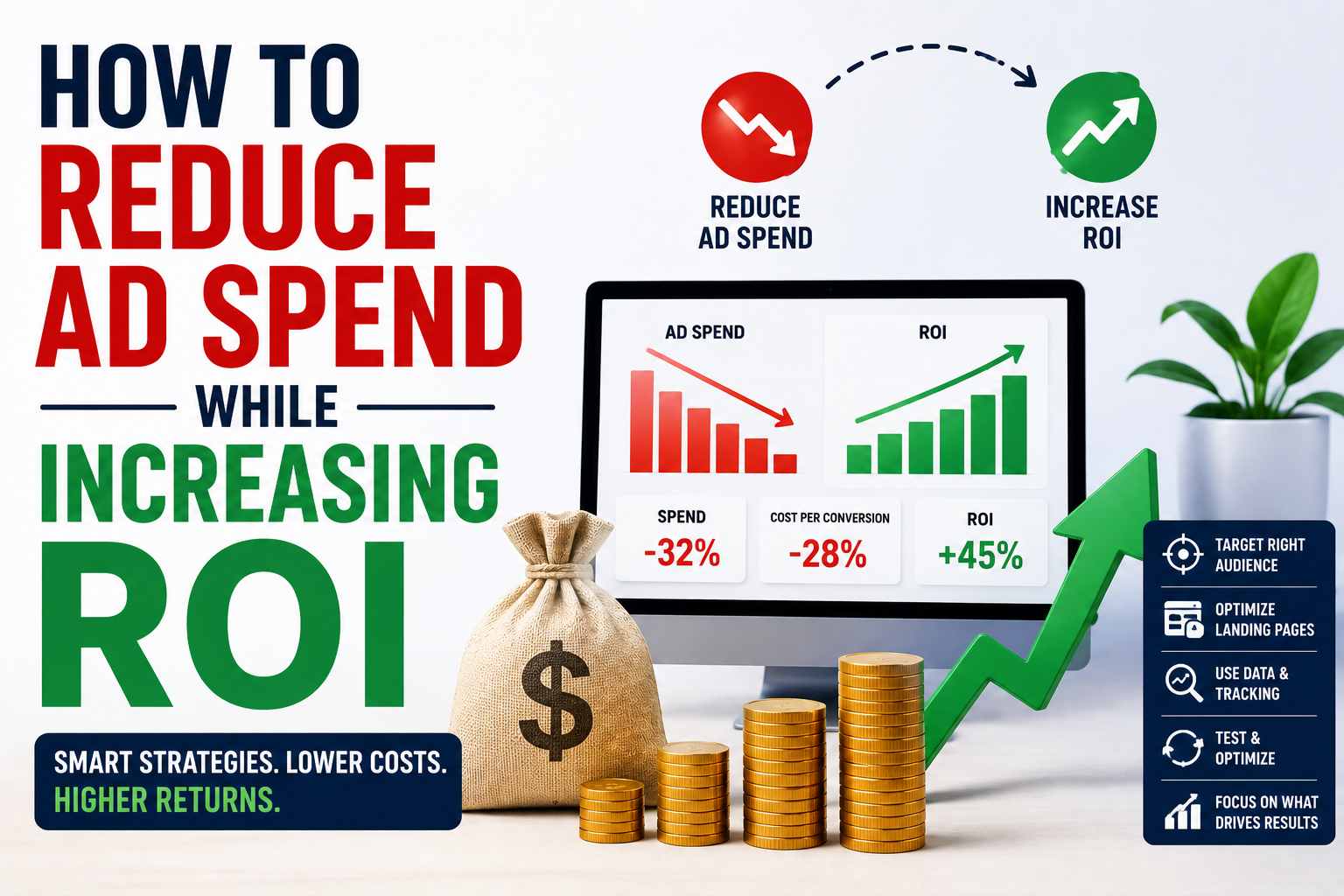
 Every business wants better advertising results without increasing marketing costs. The good news is that higher ad spending does not always mean better performance. In fact, smart optimization often delivers stronger results while using less budget. The key is focusing on efficiency, targeting the right audience, and improving conversion performance.
Reducing ad spend while increasing return on investment (ROI) is possible when businesses make data-driven decisions instead of simply spending more. Here’s how to do it effectively.
1. Focus on the Right Audience
One of the biggest reasons businesses waste ad budgets is poor targeting.
If your ads reach people who are unlikely to convert, your spending increases without meaningful returns.
Improve audience targeting by narrowing based on:
- Location
- Age
- Interests
- Purchase behavior
- Device usage
- Search intent
For example, a premium skincare brand should target audiences interested in quality beauty products—not broad, general traffic.
Why it works: Better targeting reduces wasted clicks and improves conversion quality.
2. Use Retargeting Campaigns
Retargeting is one of the most cost-effective advertising strategies.
Instead of constantly targeting cold audiences, retarget users who already:
- Visited your website
- Viewed products
- Added items to cart
- Engaged with your ads
These audiences already know your brand, making them easier and cheaper to convert.
Why it works: Warm audiences typically deliver higher ROI.
3. Improve Ad Copy and Creative
Weak ads lead to low engagement and wasted budget.
Strong ad creative should:
- Grab attention quickly
- Highlight clear benefits
- Include compelling offers
- Use strong calls-to-action
Test different headlines, visuals, and messaging regularly.
Example:
Instead of:
“Buy our services.”
Use:
“Get Expert SEO Services That Increase Website Traffic Fast.”
Why it works: Better ads improve click-through and conversion rates.
4. Optimize Landing Pages
Driving traffic to a poor landing page wastes ad spend.
Common issues:
- Slow loading speed
- Confusing design
- Weak CTA
- Poor mobile experience
- Irrelevant messaging
Your landing page should match your ad promise clearly.
Why it works: Better conversion rates lower acquisition costs.
5. Use Negative Keywords
For search advertising, irrelevant clicks can destroy ROI.
Negative keywords prevent your ads from appearing for unrelated searches.
Examples:
- Free
- Cheap
- Jobs
- Tutorial
- DIY
This keeps your budget focused on valuable traffic.
Why it works: Reduces wasted spend significantly.
6. Pause Underperforming Campaigns
Not every campaign deserves continued investment.
Review performance regularly and pause campaigns with:
- Low click-through rates
- High cost per conversion
- Poor engagement
- Weak ROI
Move budget toward high-performing campaigns instead.
Why it works: Budget reallocation improves efficiency.
7. Improve Conversion Tracking
Without proper tracking, businesses often spend blindly.
Track:
- Leads
- Purchases
- Form submissions
- Phone calls
- Revenue attribution
This helps identify what truly drives returns.
Why it works: Better data improves smarter budget decisions.
8. Test Smaller Budgets First
Scaling untested campaigns can waste significant money.
Start small, test performance, and optimize before increasing spend.
Test:
- Audiences
- Creatives
- Headlines
- Offers
- Platforms
Why it works: Small tests reduce expensive mistakes.
9. Focus on High-Intent Keywords
Not all traffic converts equally.
Prioritize keywords that signal buying intent.
Examples:
Better:
- “hire SEO agency”
- “buy skincare online”
Weaker:
- “what is SEO”
- “beauty tips”
High-intent traffic converts faster.
Why it works: Higher-quality clicks improve ROI.
10. Optimize for Mobile Performance
Many conversions happen on mobile devices.
Poor mobile experience increases bounce rates and wasted ad spend.
Ensure:
- Fast loading pages
- Mobile-friendly design
- Easy forms
- Clickable buttons
Why it works: Better mobile experiences improve conversion efficiency.
11. Use A/B Testing Continuously
Small improvements can dramatically increase ROI.
Test:
- Ad headlines
- Images
- CTA buttons
- Landing pages
- Audience segments
Even small percentage improvements can lower overall costs.
Why it works: Continuous optimization improves efficiency over time.
12. Prioritize High-Performing Channels
Not every advertising platform performs equally for every business.
Analyze where your best ROI comes from:
- Google Ads
- Facebook Ads
- Instagram
- LinkedIn
- YouTube
Shift spending toward top performers.
Why it works: Smart budget allocation improves returns.
Final Thoughts
Reducing ad spend doesn’t mean reducing growth—it means improving efficiency.
By refining targeting, optimizing campaigns, improving landing pages, and focusing on data-driven decisions, businesses can spend less while generating stronger results.
The smartest advertisers don’t simply spend more—they spend better.