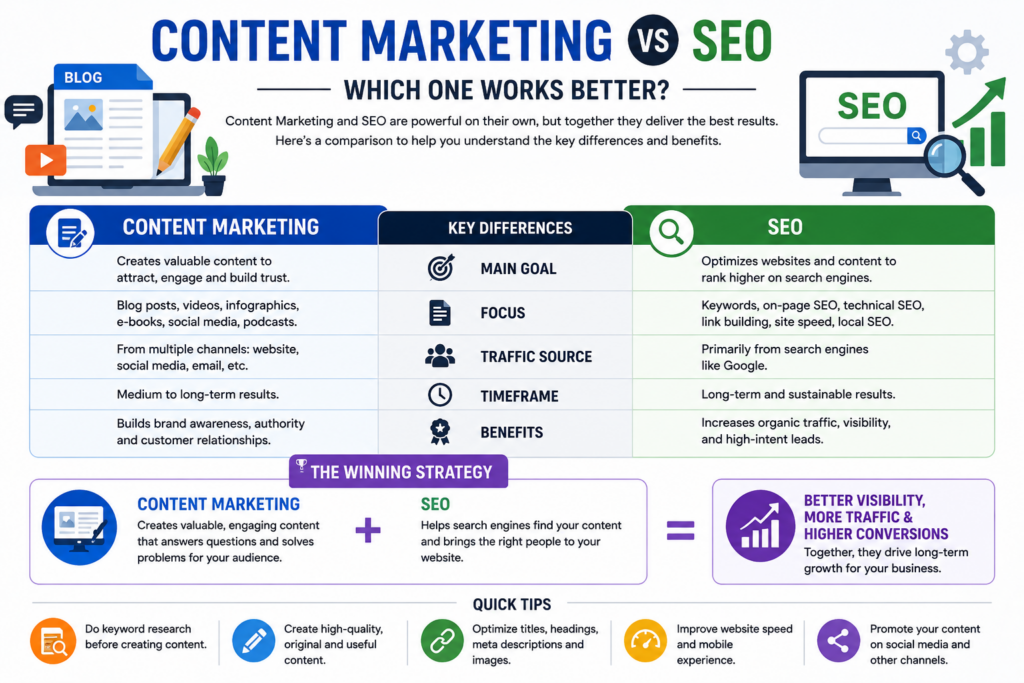
In digital marketing, two strategies often dominate conversations—Content Marketing and SEO (Search Engine Optimization). Many business owners wonder which one delivers better results. The truth is, both are powerful, but they serve slightly different purposes. Understanding how each works can help you choose the right strategy for your business growth.
What is Content Marketing?
Content marketing is the process of creating and sharing valuable content to attract, engage, and convert your target audience. This content can include:
Blog posts
Videos
Social media content
Infographics
Case studies
E-books
Email newsletters
Podcasts
The goal of content marketing is to build trust, educate potential customers, and create long-term relationships with your audience.
Example: A skincare brand publishing educational blogs about skincare routines is using content marketing.
What is SEO?
SEO is the practice of optimizing your website and content so it ranks higher on search engines like Google. SEO helps people find your business when they search for relevant keywords.
SEO includes:
Keyword research
On-page optimization
Technical SEO
Link building
Website speed optimization
Mobile optimization
Local SEO
The main goal of SEO is to increase organic website traffic.
Content Marketing vs SEO: Key Differences
Factor
Content Marketing
SEO
Main Goal
Audience engagement
Search visibility
Focus
Valuable content creation
Search engine ranking
Traffic Source
Multiple channels
Primarily search engines
Timeframe
Medium to long-term
Long-term
User Intent
Education & trust building
Search-driven discovery
Benefits of Content Marketing
1. Builds Brand Authority
High-quality content positions your business as an industry expert.
2. Engages Your Audience
Content helps you connect with customers through education, storytelling, and problem-solving.
3. Supports Multiple Platforms
Content can be used across websites, social media, email campaigns, and ads.
4. Improves Customer Trust
Helpful content makes your audience more likely to trust your brand.
Benefits of SEO
1. Drives Organic Traffic
SEO helps your website attract users actively searching for your products or services.
2. Cost-Effective Growth
Unlike paid ads, SEO can continue delivering traffic over time.
3. Better Search Visibility
Higher rankings increase brand exposure and credibility.
4. Targets High-Intent Users
SEO attracts people already looking for solutions.
Which One Works Better?
The simple answer: Neither works best alone.
Content marketing without SEO may create excellent content that nobody discovers.
SEO without quality content may improve technical rankings temporarily, but visitors won’t stay or convert.
The most effective strategy combines both.
Example:
A blog optimized for SEO with the keyword “best digital marketing strategies” can rank on Google, while the valuable content itself builds trust and encourages conversions.
This is where real digital growth happens.
Best Strategy: SEO + Content Marketing
When combined, they create powerful results:
SEO helps users find your content
Content keeps users engaged
SEO increases visibility
Content improves trust
SEO drives traffic
Content converts visitors into customers
This partnership creates sustainable long-term business growth.
When to Focus More on Content Marketing
Content marketing may be your priority if you want to:
Build brand awareness
Educate your audience
Improve social media engagement
Strengthen customer relationships
When to Focus More on SEO
SEO may be the bigger priority if you want to:
Increase website traffic
Rank higher on Google
Generate organic leads
Improve local search visibility
Final Thoughts
So, Content Marketing vs SEO—which works better? The real winner is the combination of both.
SEO gets people to your website. Content marketing gives them a reason to stay, trust your brand, and take action.
Businesses that integrate both strategies create stronger visibility, better engagement, and long-term online success.