One of the most common questions in digital marketing is: How often should you publish content for SEO? Many business owners and bloggers believe publishing daily is the only way to rank higher on Google. However, the real answer is more strategic. SEO success depends more on quality, consistency, and relevance than simply publishing large amounts of content.
Let’s understand what works best.
Does Publishing More Content Help SEO?
Yes—but only when the content is useful and optimized.
Publishing more high-quality content can help because it:
Targets more keywords
Creates more opportunities to rank
Increases website visibility
Attracts organic traffic
Builds topical authority
But publishing poor-quality content just to increase volume can actually hurt performance.
Quality vs Quantity: What Matters More?
Google prioritizes helpful, original, and valuable content.
A well-researched blog published once a week often performs better than daily low-quality posts. Search engines focus on user experience, relevance, and usefulness—not just frequency.
So, quality always comes first.
Ideal Publishing Frequency for SEO
The ideal posting frequency depends on your business goals, industry, and resources.
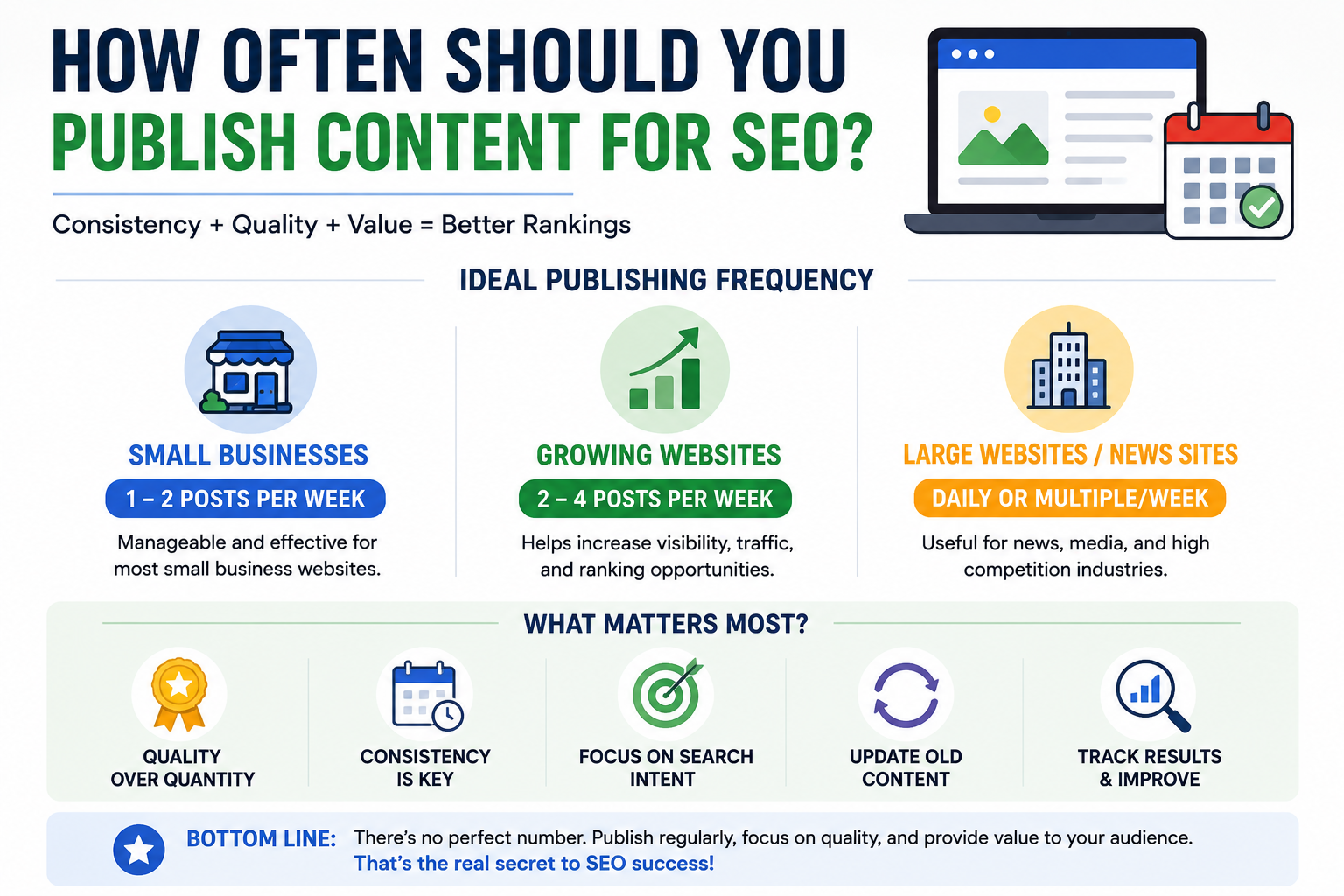
For Small Businesses
1–2 blog posts per week
This is realistic for most businesses and allows enough time for proper keyword research, writing, optimization, and promotion.
For Growing Websites
2–4 blog posts per week
If you want faster growth and can maintain quality, publishing more frequently can increase ranking opportunities.
For Large Content-Driven Websites
Daily or multiple times per week
News websites, media brands, and high-competition niches may benefit from frequent publishing because their audiences expect fresh content.
Why Consistency Matters More
Google values active websites, but consistency is more important than random bursts of content.
Example:
Publishing 2 quality blogs every week for 6 months is better than posting 15 blogs in one week and disappearing for months.
Consistent publishing helps:
Build audience trust
Improve crawl frequency
Strengthen website authority
Maintain steady traffic growth
Content Freshness and SEO
Fresh content can improve rankings, especially in competitive or fast-changing industries like:
Technology
Digital marketing
Finance
News
Health trends
But evergreen content remains valuable for long-term SEO.
A balanced strategy works best:
Publish new content regularly
Update older content when needed
Factors That Affect Publishing Frequency
1. Competition Level
Highly competitive industries may require more content to build authority faster.
2. Content Quality Capacity
If your team can only create one excellent blog weekly, that’s better than five weak articles.
3. Keyword Opportunities
More target keywords may justify publishing more content.
4. Audience Expectations
Some industries demand frequent updates, while others don’t.
Best SEO Content Publishing Tips
To get better SEO results:
Focus on keyword research first
Prioritize quality over quantity
Maintain a realistic publishing schedule
Update old content regularly
Optimize every blog properly
Track performance with analytics
Publish content that matches search intent
Common Mistakes to Avoid
Avoid:
Publishing low-quality filler content
Keyword stuffing
Inconsistent posting schedules
Ignoring older content updates
Writing without an SEO strategy
Final Thoughts
So, how often should you publish content for SEO?
There’s no universal number, but for most businesses, 1–3 high-quality posts per week is a strong starting point.
SEO rewards consistency, relevance, and helpful content—not just volume. A sustainable publishing strategy that focuses on quality will deliver better long-term rankings, traffic, and business growth than simply posting as much as possible.