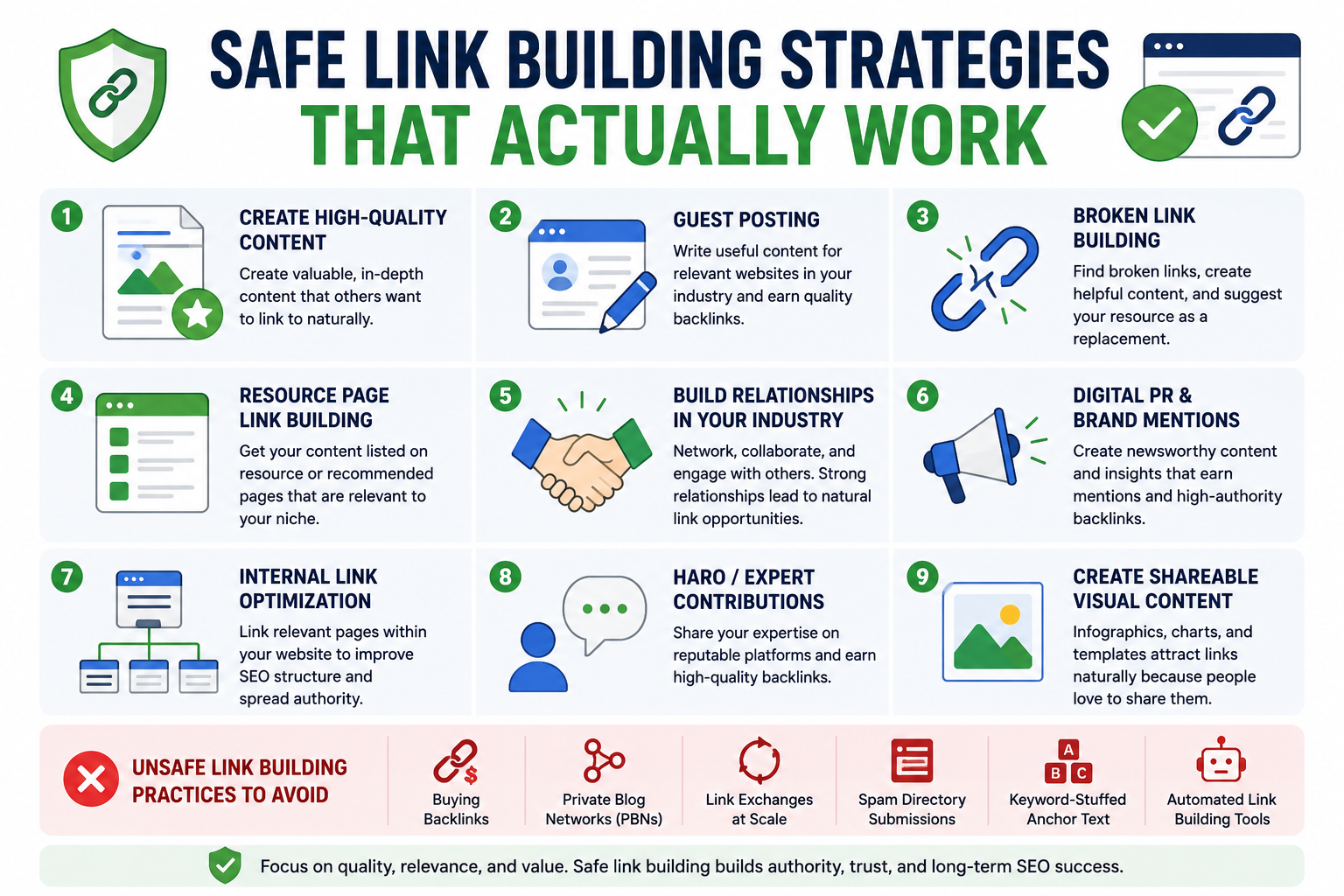
Link building remains one of the most important SEO strategies for improving website authority and search rankings. However, not all link-building techniques are safe. Using spammy or manipulative tactics can lead to search engine penalties and long-term damage to your website’s reputation. The good news is that many ethical and effective strategies can help you build quality backlinks safely.
Here are safe link-building strategies that actually work.
1. Create High-Quality Content
The safest and most effective link-building strategy is creating valuable content people naturally want to reference.
Examples include:
In-depth guides
Research-based articles
Infographics
Case studies
Checklists
Helpful tutorials
When your content solves real problems, other websites are more likely to link to it naturally.
2. Guest Posting on Relevant Websites
Guest posting involves writing valuable content for other websites in your industry in exchange for exposure and a backlink.
Best practices:
Choose reputable websites
Focus on niche relevance
Provide useful, original content
Avoid low-quality guest post farms
Done correctly, guest posting builds both authority and backlinks.
3. Broken Link Building
This strategy involves finding broken links on relevant websites and suggesting your content as a replacement.
How it works:
Identify broken external links
Create matching helpful content
Contact the website owner
Recommend your resource
It’s helpful for both parties and considered safe.
4. Resource Page Link Building
Many websites maintain resource or recommended-tools pages.
If your content provides genuine value, you can request inclusion.
Strong relationships often lead to natural mentions.
6. Digital PR and Brand Mentions
Create newsworthy or useful content people want to mention.
Examples:
Industry reports
Surveys
Unique insights
Press-worthy announcements
Digital PR can generate high-authority backlinks.
7. Internal Link Optimization
While internal links aren’t external backlinks, they improve SEO structure and help distribute authority across your website.
Best practices:
Link relevant pages naturally
Use descriptive anchor text
Strengthen cornerstone content
This supports overall SEO safely.
8. HARO / Expert Contribution Opportunities
Providing expert insights to journalists and publishers can earn authoritative backlinks.
Opportunities include:
Expert quote platforms
Industry interviews
Commentary requests
These links are highly valuable.
9. Create Shareable Visual Content
Infographics, charts, templates, and visual guides often attract backlinks because people reference them in blogs and articles.
Visual assets increase shareability.
Unsafe Link Building Practices to Avoid
Avoid:
Buying backlinks Private blog networks (PBNs) Link exchanges at scale Spam directory submissions Keyword-stuffed anchor text abuse Automated link-building software
These tactics risk penalties.
Final Thoughts
Safe link building focuses on quality, relevance, and genuine value—not shortcuts.
By creating strong content, building industry relationships, using guest posting strategically, and earning links naturally, you can improve rankings while protecting your website from SEO penalties.
Sustainable SEO growth comes from trust-based link building—not risky tactics.