Backlinks vs Internal Links: What’s the Difference?
When learning SEO, two important terms you’ll hear often are backlinks and internal links. Both play a major role in improving website visibility, rankings, and user experience, but they serve different purposes. Understanding the difference between backlinks and internal links helps businesses build a stronger SEO strategy.
Let’s break it down in a simple way.
What Are Backlinks?
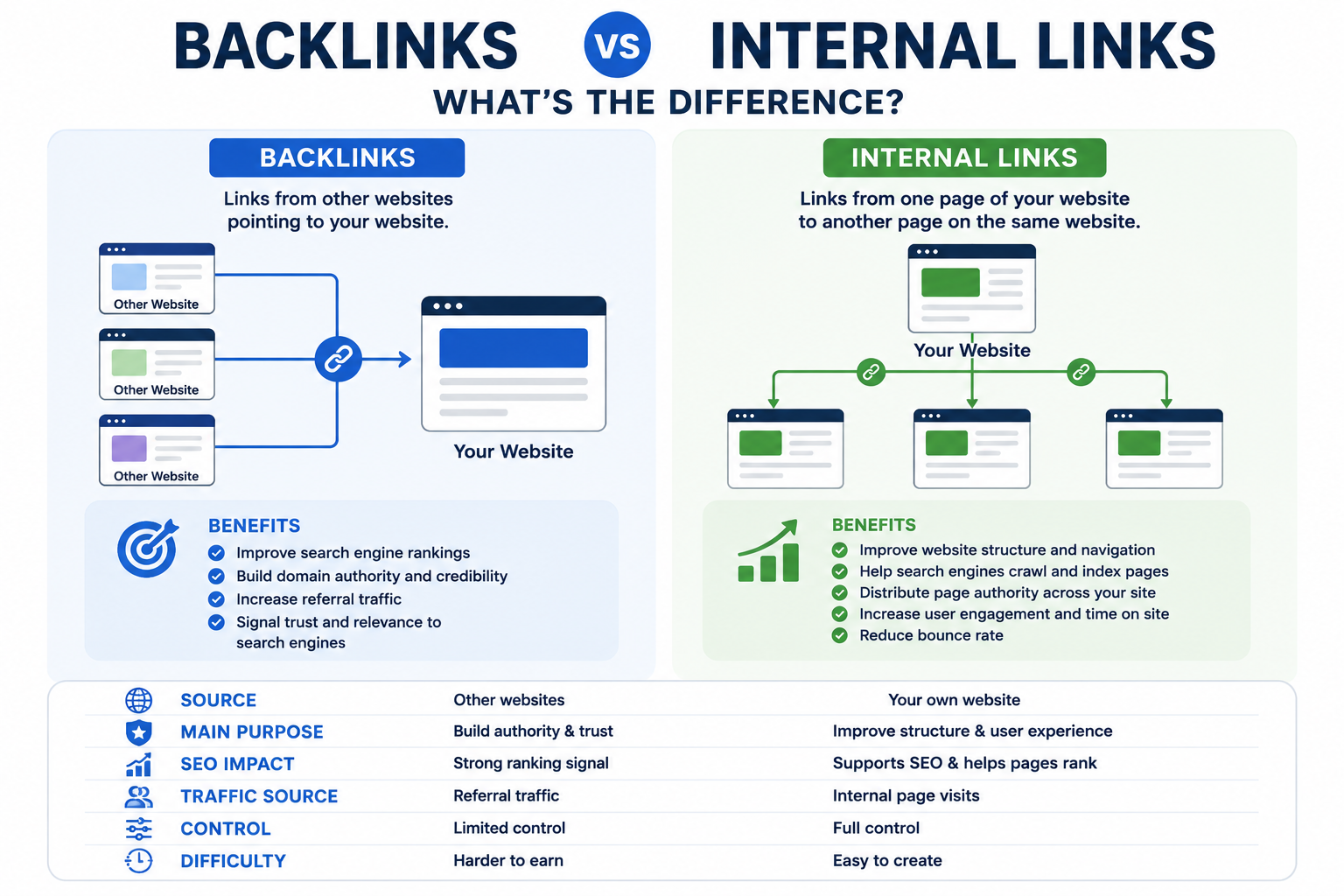
Backlinks are links from other websites pointing to your website.
Example: If a marketing blog links to your article about SEO tips, that link is a backlink.
Backlinks are also called:
Inbound links
Incoming links
External links (in some contexts)
Search engines often treat backlinks as trust signals. When reputable websites link to your content, it suggests your website is valuable and authoritative.
Benefits of Backlinks
Backlinks help by:
Improving search engine rankings
Building domain authority
Increasing website credibility
Driving referral traffic
Helping search engines discover content faster
High-quality backlinks are considered one of the strongest ranking factors in SEO.
What Are Internal Links?
Internal links are links that connect one page of your website to another page on the same website.
Example: A blog about content marketing linking to another blog about keyword research on your own website.
Internal links help organize your website and improve navigation.
Benefits of Internal Links
Internal links help by:
Improving website structure
Helping search engines crawl pages
Distributing page authority
Guiding users to relevant content
Increasing time spent on site
Reducing bounce rates
Internal linking improves both SEO and user experience.
Backlinks vs Internal Links: Key Differences
Feature
Backlinks
Internal Links
Source
Other websites
Your own website
Main Purpose
Build authority & trust
Improve structure & navigation
SEO Impact
Strong ranking signal
Supports SEO structure
Traffic Source
Referral traffic
Internal page visits
Control
Limited control
Full control
Difficulty
Harder to earn
Easy to create
Which Is More Important?
Both matter—but in different ways.
Backlinks Matter More for Authority
Backlinks signal trust and credibility to search engines. High-quality external links can significantly improve rankings.
Internal Links Matter More for Structure
Internal links help search engines understand your website hierarchy and guide users through related content.
Without internal links, even great content can remain hidden.
Best Practices for Backlinks
For healthy backlink SEO:
Focus on quality over quantity
Earn links from relevant websites
Use guest posting carefully
Create valuable shareable content
Avoid buying backlinks
Stay away from spam tactics
Best Practices for Internal Links
For effective internal linking:
Use descriptive anchor text
Link relevant pages naturally
Prioritize important pages
Fix broken links
Avoid over-linking
Update older content regularly
Common Mistakes to Avoid
Avoid:
Buying backlinks Spam link exchanges Keyword-stuffed anchor text Broken internal links Linking irrelevant pages Ignoring internal SEO structure
Final Thoughts
So, Backlinks vs Internal Links—what’s the difference?
Backlinks build authority from outside your website. Internal links strengthen structure within your website.
A successful SEO strategy needs both.
Backlinks help search engines trust your content, while internal links help them understand and navigate it. Together, they create a stronger foundation for long-term SEO growth.