



Blog SEO Tips to Rank Faster on Google









Blog SEO Tips to Rank Faster on Google
Ranking a blog on Google takes strategy, consistency, and smart optimization. While SEO is a long-term process, using the right techniques can help your blog gain visibility faster and attract more organic traffic. If you want your content to perform better in search results, these practical blog SEO tips can make a big difference.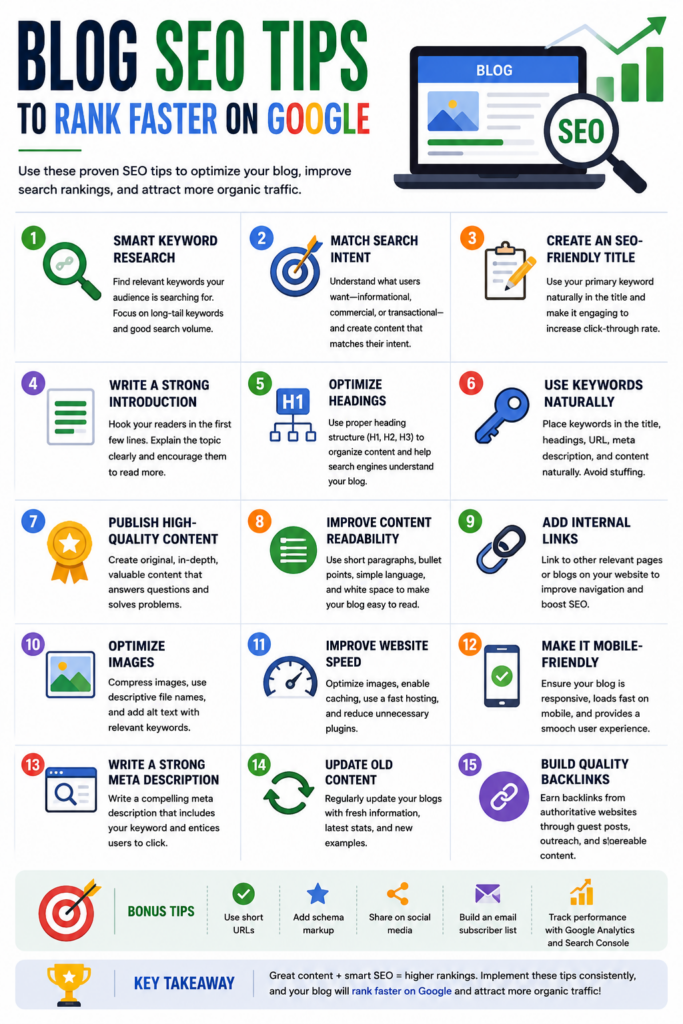
1. Start with Smart Keyword Research
Before writing your blog, identify keywords your target audience is actively searching for. Focus on keywords with good search volume and manageable competition.
Look for:
- Primary keywords
- Long-tail keywords
- Question-based keywords
- Related search terms
Choosing the right keyword helps Google understand your content and match it to relevant searches.
2. Match Search Intent
Your content should align with what users actually want.
Examples:
- Informational: “What is SEO?”
- Commercial: “Best SEO tools”
- Transactional: “Buy SEO software”
If your blog doesn’t match search intent, ranking becomes much harder.
3. Create an SEO-Friendly Title
Your title should include the primary keyword naturally while remaining engaging.
Good example:
Blog SEO Tips to Rank Faster on Google
A compelling title improves click-through rates and search visibility.
4. Write a Strong Introduction
Google values user engagement. If readers leave quickly, rankings may suffer.
Your introduction should:
- Clearly explain the topic
- Grab attention immediately
- Encourage readers to continue
5. Optimize Headings Properly
Use structured headings:
- H1: Main title
- H2: Main sections
- H3: Subsections
This improves readability and helps search engines understand content hierarchy.
6. Naturally Use Keywords
Place keywords in:
- Title
- Introduction
- Headings
- URL
- Meta description
- Image alt text
- Throughout content naturally
Avoid keyword stuffing—it can hurt rankings.
7. Publish High-Quality Content
Google prioritizes valuable, original, and helpful content.
Your blog should:
- Answer questions
- Solve user problems
- Provide actionable insights
- Be easy to understand
Thin content rarely ranks well.
8. Improve Content Readability
Readable blogs perform better because users stay longer.
Best practices:
- Short paragraphs
- Bullet points
- Clear formatting
- Simple language
- Visual spacing
Easy-to-read content improves user experience.
9. Add Internal Links
Link to other relevant pages or blog posts on your website.
Benefits:
- Better navigation
- More page views
- Improved site structure
- Better SEO crawling
10. Optimize Images
Large, unoptimized images slow websites.
Tips:
- Compress image sizes
- Add descriptive filenames
- Use keyword-friendly alt text
- Choose responsive images
Faster pages improve rankings.
11. Improve Website Speed
Google favors fast-loading websites.
To improve speed:
- Compress images
- Minimize code
- Use caching
- Choose reliable hosting
- Reduce unnecessary plugins
Slow websites increase bounce rates.
12. Make Your Blog Mobile-Friendly
Most users browse from smartphones.
Ensure:
- Responsive design
- Easy navigation
- Readable fonts
- Clickable buttons
- Fast mobile loading
Mobile SEO is essential for rankings.
13. Write a Strong Meta Description
A compelling meta description improves click-through rates.
Example:
Discover practical blog SEO tips to rank faster on Google, increase traffic, and improve search visibility.
14. Update Old Content
Fresh content often performs better.
Regularly update:
- Statistics
- Outdated information
- Broken links
- New SEO opportunities
Google values relevance.
15. Build Quality Backlinks
Backlinks remain an important ranking factor.
Ways to earn backlinks:
- Guest posting
- High-value content
- Industry outreach
- Shareable resources
Quality matters more than quantity.
Final Thoughts
Ranking faster on Google requires more than just adding keywords. It takes quality content, technical optimization, strong user experience, and consistent SEO practices.
By applying these blog SEO tips, you can improve visibility, attract organic traffic, and give your content a stronger chance to rank faster in search results.