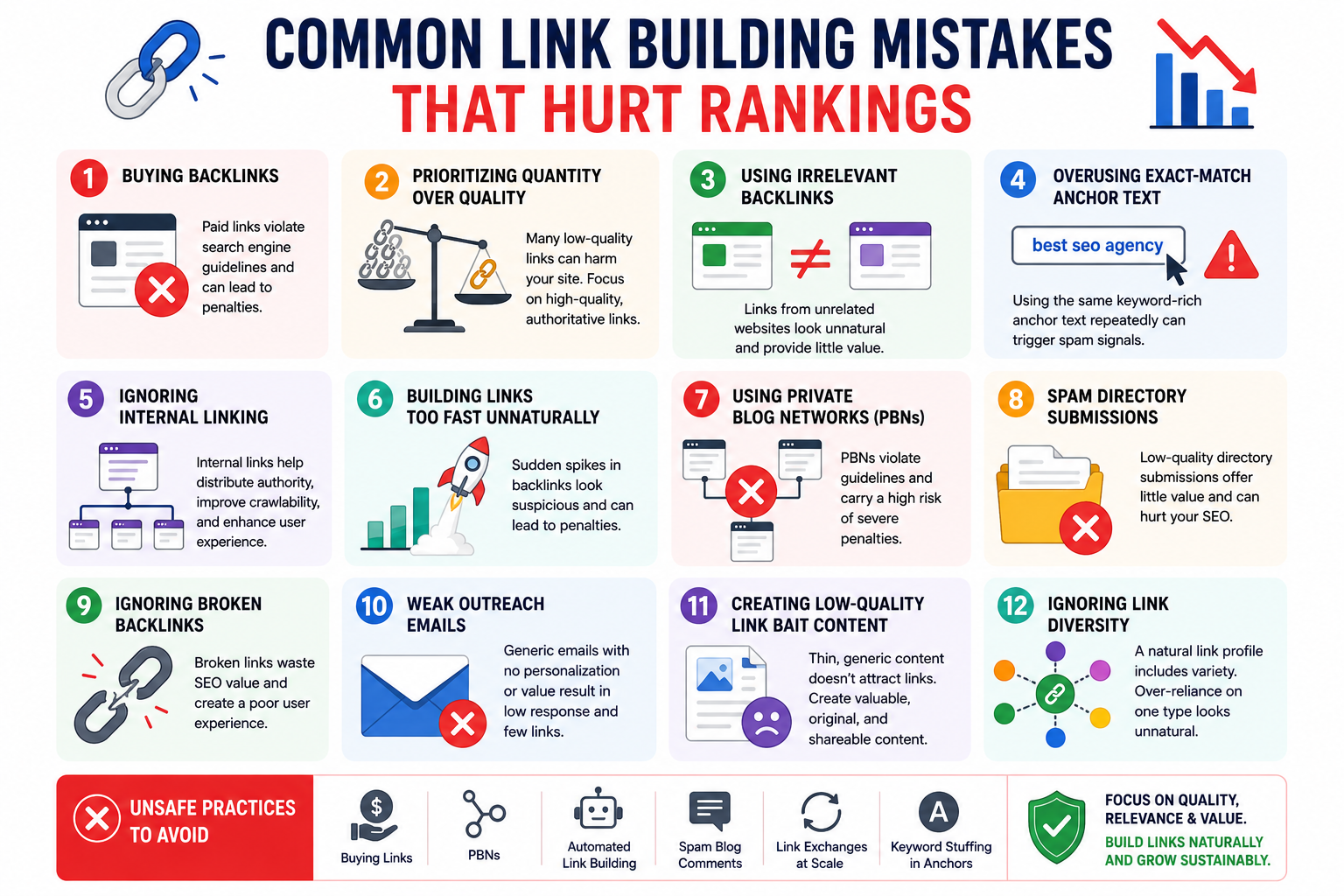
Link building is one of the most important parts of SEO, but when done incorrectly, it can damage your website instead of helping it. Search engines value high-quality, relevant backlinks because they signal trust and authority. However, poor link-building practices can lead to penalties, lower rankings, and lost credibility.
If you want sustainable SEO growth, avoid these common link-building mistakes.
1. Buying Backlinks
One of the biggest SEO mistakes is purchasing backlinks.
While paid links may seem like a quick shortcut to higher rankings, search engines consider this a manipulative practice. Low-quality paid links can trigger penalties and hurt long-term SEO performance.
Focus on earning links naturally instead.
2. Prioritizing Quantity Over Quality
Not all backlinks are equal.
A few high-quality links from trusted, relevant websites are far more valuable than hundreds of weak spammy links.
Low-quality backlinks can make your website look suspicious to search engines.
Quality always wins.
3. Using Irrelevant Backlinks
Backlinks should come from websites related to your niche or industry.
Example:
A digital marketing website getting backlinks from unrelated gambling or random low-value sites looks unnatural.
Relevance improves link value and SEO trust.
4. Overusing Exact-Match Anchor Text
Anchor text is the clickable text in a hyperlink.
Using the exact same keyword repeatedly looks manipulative.
Example:
Repeatedly using “best SEO agency” as anchor text can trigger spam signals.
Use natural anchor text variations instead.
5. Ignoring Internal Linking
Many websites focus only on external backlinks and forget internal linking.
Internal links help:
Distribute authority
Improve crawlability
Strengthen important pages
Enhance user experience
Ignoring internal SEO weakens your site structure.
6. Building Links Too Fast Unnaturally
Sudden unnatural backlink spikes can look suspicious.
Healthy link growth usually happens gradually.
Search engines may question aggressive, artificial link-building patterns.
Natural growth is safer.
7. Using Private Blog Networks (PBNs)
PBNs are networks of websites created mainly to manipulate rankings through backlinks.
Although some marketers still use them, they violate search engine guidelines and carry serious risk.
Penalties can severely impact visibility.
8. Spam Directory Submissions
Submitting your website to low-quality directories simply for backlinks is outdated and risky.
Only relevant, reputable directories may offer value.
Avoid mass directory spam.
9. Ignoring Broken Backlinks
Sometimes backlinks point to pages that no longer exist.
Broken backlinks waste SEO value and create poor user experience.
Regularly monitor:
404 pages
Lost backlinks
Broken referral links
Fixing them preserves authority.
10. Weak Outreach Emails
Poor outreach reduces success.
Common mistakes:
Generic copy-paste emails
No personalization
Asking for links without offering value
Relationship-based outreach performs much better.
11. Creating Low-Quality Link Bait Content
People won’t link to weak content.
Thin, generic, or low-value pages rarely attract natural backlinks.
Create:
Research-backed guides
Helpful resources
Original insights
Shareable visuals
Strong content earns better links.
12. Ignoring Link Diversity
A healthy backlink profile includes variety.
Examples:
Blog mentions
Guest posts
Resource links
Editorial mentions
Industry citations
Over-reliance on one source looks unnatural.
Common Unsafe Practices to Avoid
Buying links PBNs Automated link-building tools Spam blog comments Link exchanges at scale Keyword stuffing in anchors
Final Thoughts
Link building can significantly improve SEO—but only when done correctly.
Avoid shortcuts, focus on quality and relevance, build links naturally, and prioritize user value.
Sustainable SEO rankings come from trust-based link building—not manipulative tactics that risk penalties.