



How to Write SEO-Friendly Blog Content







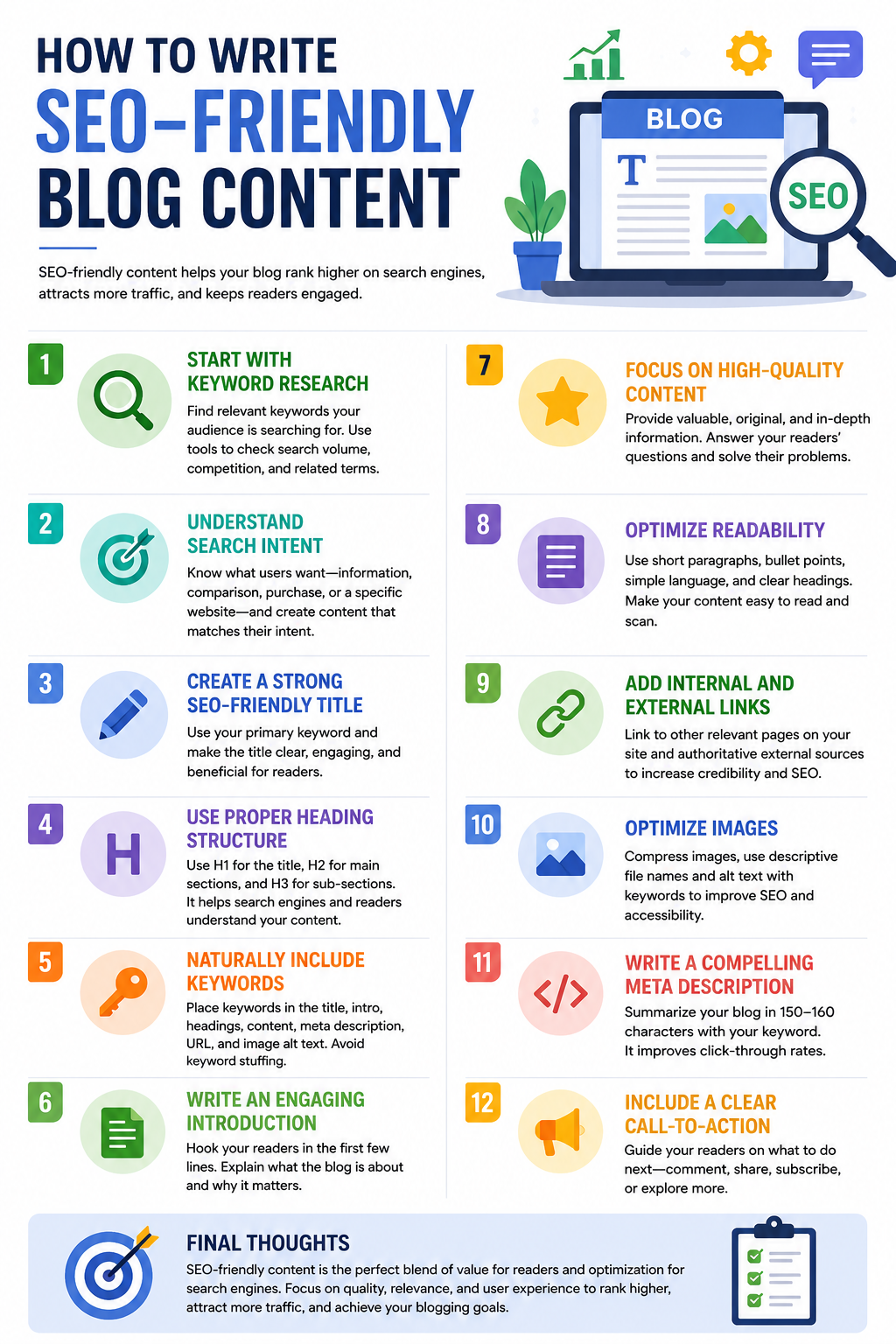


How to Write SEO-Friendly Blog Content
Creating a blog is easy, but writing content that ranks on search engines and attracts readers requires a smart SEO strategy. SEO-friendly blog content helps your website appear in search results, drive organic traffic, and improve engagement. Whether you’re a business owner, marketer, or blogger, understanding SEO writing can significantly boost your online visibility.
What is SEO-Friendly Blog Content?
SEO-friendly blog content is content optimized for both search engines and human readers. It includes relevant keywords, clear structure, valuable information, and a positive user experience. Good SEO content doesn’t just rank—it also keeps visitors engaged and encourages action.
Steps to Write SEO-Friendly Blog Content
1. Start with Keyword Research
Before writing, identify the keywords your audience is searching for. These are the terms people type into Google when looking for information.
For example, if your topic is digital marketing, useful keywords could be:
- SEO tips for beginners
- SEO-friendly content writing
- blog SEO strategy
Use keyword research tools to find:
- Search volume
- Competition level
- Related keywords
- User search intent
Choosing the right keywords helps your content rank for relevant searches.
2. Understand Search Intent
Search intent means understanding why someone is searching for a topic.
Types of intent include:
- Informational: Looking for knowledge
- Commercial: Comparing options
- Transactional: Ready to buy
- Navigational: Looking for a specific site
Your content should match what users expect to find.
3. Create a Strong SEO-Friendly Title
Your blog title should be clear, engaging, and keyword-focused.
Good example:
How to Write SEO-Friendly Blog Content
Weak example:
Writing Better Blogs
A strong title improves click-through rates and helps search engines understand your topic.
4. Write an Engaging Introduction
The introduction should quickly explain what the blog covers and why it matters.
Readers decide within seconds whether to continue, so make the opening useful and compelling.
5. Use Proper Heading Structure
Organize content with headings:
- H1: Main title
- H2: Major sections
- H3: Subsections
Clear structure improves readability and helps search engines understand your content.
6. Naturally Include Keywords
Place your primary keyword in:
- Title
- Introduction
- Headings
- Meta description
- URL
- Image alt text
But avoid keyword stuffing. Write naturally for humans first.
7. Focus on High-Quality Content
Google rewards helpful, informative, and original content.
Your blog should:
- Solve problems
- Answer common questions
- Provide accurate information
- Be easy to understand
Thin or repetitive content performs poorly.
8. Optimize Readability
SEO content should be easy to scan.
Best practices:
- Short paragraphs
- Bullet points
- Simple language
- Clear formatting
- White space
Readable content improves user experience and engagement.
9. Add Internal and External Links
Internal links connect readers to other pages on your website.
External links reference trustworthy sources.
Benefits:
- Better navigation
- Improved authority
- Longer session duration
10. Optimize Images
Images improve engagement, but they should be optimized.
Tips:
- Compress image sizes
- Use descriptive filenames
- Add keyword-friendly alt text
- Choose responsive images
Fast-loading images improve SEO.
11. Write a Meta Description
A meta description is the short summary shown in search results.
Example:
Learn how to write SEO-friendly blog content that ranks higher, attracts traffic, and engages readers.
A compelling meta description increases clicks.
12. Include a Clear Call-to-Action
Guide readers on what to do next:
- Contact your business
- Read another blog
- Subscribe
- Download a guide
SEO traffic becomes valuable when it converts.
Final Thoughts
Writing SEO-friendly blog content is about balancing optimization with value. By using the right keywords, structuring content properly, improving readability, and focusing on user intent, you can create blogs that rank well and keep readers engaged.
Great SEO content doesn’t just bring traffic—it builds trust, authority, and long-term business growth.