If you’re new to SEO, you’ve probably heard the term link building. It’s one of the most important parts of search engine optimization and plays a major role in helping websites rank higher on Google. But what exactly is link building, and why does it matter?
This beginner-friendly guide explains everything you need to know.
What is Link Building?
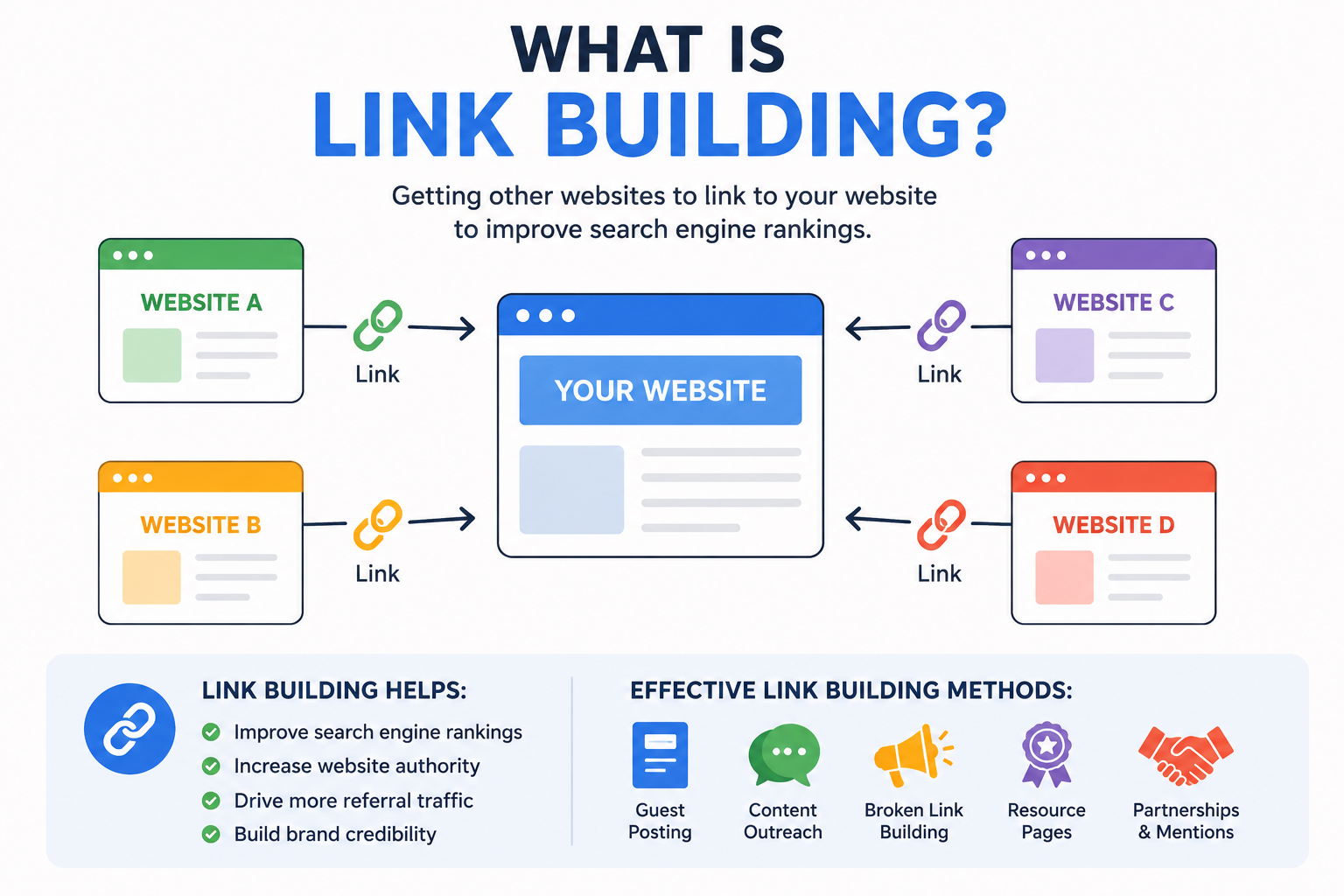
Link building is the process of getting hyperlinks (commonly called backlinks) from other websites to your website.
A hyperlink allows users to move from one webpage to another by clicking a link. In SEO, backlinks act like votes of confidence. When trusted websites link to your content, search engines see your website as more credible and valuable.
Example: If a popular marketing blog links to your SEO article, that backlink can improve your search visibility.
Why is Link Building Important for SEO?
Search engines use backlinks as a ranking signal.
Strong backlinks help because they:
Improve search engine rankings
Increase website authority
Drive referral traffic
Help search engines discover pages faster
Build online credibility
Websites with quality backlinks often rank better than competitors with weak link profiles.
Types of Links
1. Backlinks (Inbound Links)
These are links from other websites pointing to your site.
Example:
A business blog linking to your article.
This is the most valuable type for SEO.
2. Internal Links
Links between pages on your own website.
Example:
Linking a blog post to your services page.
Internal links improve navigation and SEO structure.
3. Outbound Links
Links from your website to another website.
These help provide references and improve content credibility.
Quality vs Quantity in Link Building
Not all backlinks are equal.
A single backlink from a trusted, authoritative website is often more valuable than dozens of low-quality links.
Good backlinks usually come from:
Relevant websites
Trusted domains
Real content pages
Industry-related sources
Poor backlinks may come from spammy or irrelevant websites.
Google values quality over quantity.
Beginner-Friendly Link Building Strategies
1. Create High-Quality Content
People naturally link to useful content.
Examples:
In-depth guides
Original research
Helpful tutorials
Infographics
Case studies
Great content attracts backlinks over time.
2. Guest Blogging
Write articles for other websites in your industry and include a relevant link back to your site.
This helps with:
Backlinks
Brand exposure
Referral traffic
3. Business Directory Listings
Submit your business to trusted directories.
Useful for local SEO and basic backlink building.
4. Resource Page Outreach
Some websites maintain helpful resource lists.
If your content fits, you can request inclusion.
5. Broken Link Building
Find broken links on websites and suggest your content as a replacement.
This helps both website owners and your SEO.
6. Shareable Visual Content
Infographics, charts, and useful visuals often earn backlinks because people reference them.
Link Building Mistakes to Avoid
Avoid:
Buying backlinks
Using spammy link farms
Excessive link exchanges
Irrelevant backlinks
Low-quality guest posting
Over-optimized anchor text
Bad link practices can hurt rankings.
How Long Does Link Building Take?
Link building is a long-term SEO strategy.
Results depend on:
Competition
Website authority
Content quality
Outreach consistency
Meaningful improvements may take weeks or months.
Final Thoughts
Link building is a powerful SEO strategy that helps improve rankings, authority, and website visibility. For beginners, the best approach is focusing on quality backlinks through valuable content and ethical SEO practices.
Instead of chasing hundreds of links, focus on building relevant, trustworthy connections that create lasting SEO growth.